
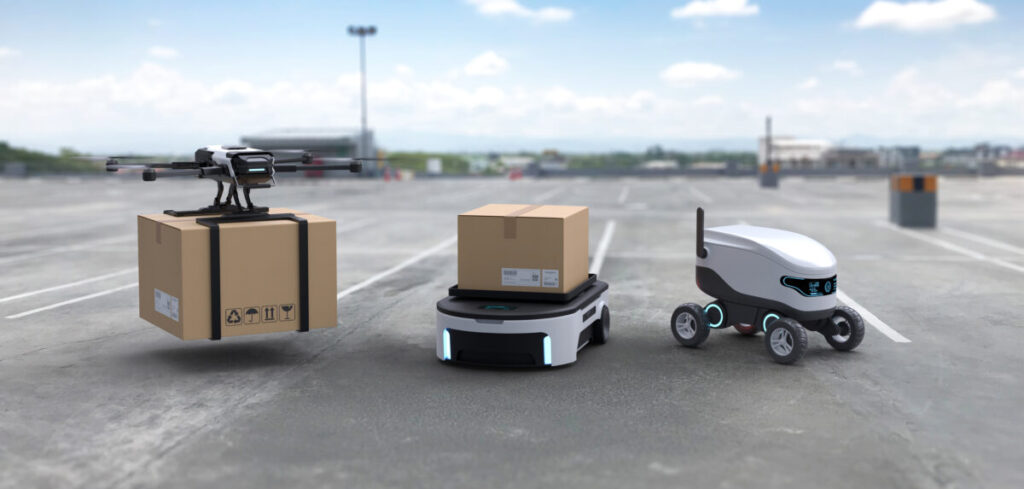

The report by Market Research Forecast, delves into emerging trends, drivers, restraints, and opportunities for market stakeholders. The primary factor propelling the growth of the autonomous last-mile delivery market is the increasing global investment in research and development.
The study profiles several key players in the market, including Airbus S.A.S from the Netherlands, Amazon based in Seattle, DHL International GmbH in Germany, DPD Group from France, Drone Delivery Canada, Flirtey from Reno, Flytrex in Israel, JD.com from China, MATTERNET in California, Savioke from Campbell, Starship Technologies in San Francisco, and United Parcel Service of America, Inc based in Atlanta.
The report provides a comprehensive overview of the autonomous last-mile delivery market, which was valued at USD 51.38 billion in 2023 and is projected to reach USD 65.37 billion by 2032, growing at a CAGR of 3.5% over the forecast period. Last-mile delivery, the final step in the logistics chain, involves transporting goods from a warehouse or hub to the customer’s doorstep. This segment is critical as it represents over 50% of total shipping costs and is essential in industries like food, e-commerce, retail, and pharmaceuticals. The rise in internet usage and the expansion of e-commerce have significantly boosted online shopping, thereby increasing the demand for efficient last-mile delivery solutions.
The market is segmented based on vehicle type into aerial delivery drones, ground delivery bots, and self-driving trucks and vans. Solutions are categorized into hardware, software, and services, while the range is divided into short-range (up to 20km) deliveries.
Several factors drive the market. There is a growing demand for forged products in sectors such as power, agriculture, aerospace, and defense. Additionally, the increasing adoption of automation in manufacturing is a significant trend contributing to market growth. However, the market faces challenges such as inadequate infrastructure and the complexity of managing delivery range, which may hinder growth.
In conclusion, the autonomous last-mile delivery market is poised for steady growth, driven by advancements in technology and increasing investments in R&D. The key players in the industry are well-positioned to leverage these opportunities, despite the challenges posed by infrastructure limitations and range management complexities. The detailed analysis provided in this report offers valuable insights for stakeholders looking to navigate this evolving market.